
Nonagon

Turn Imbalance Into Revenue, Not Risk

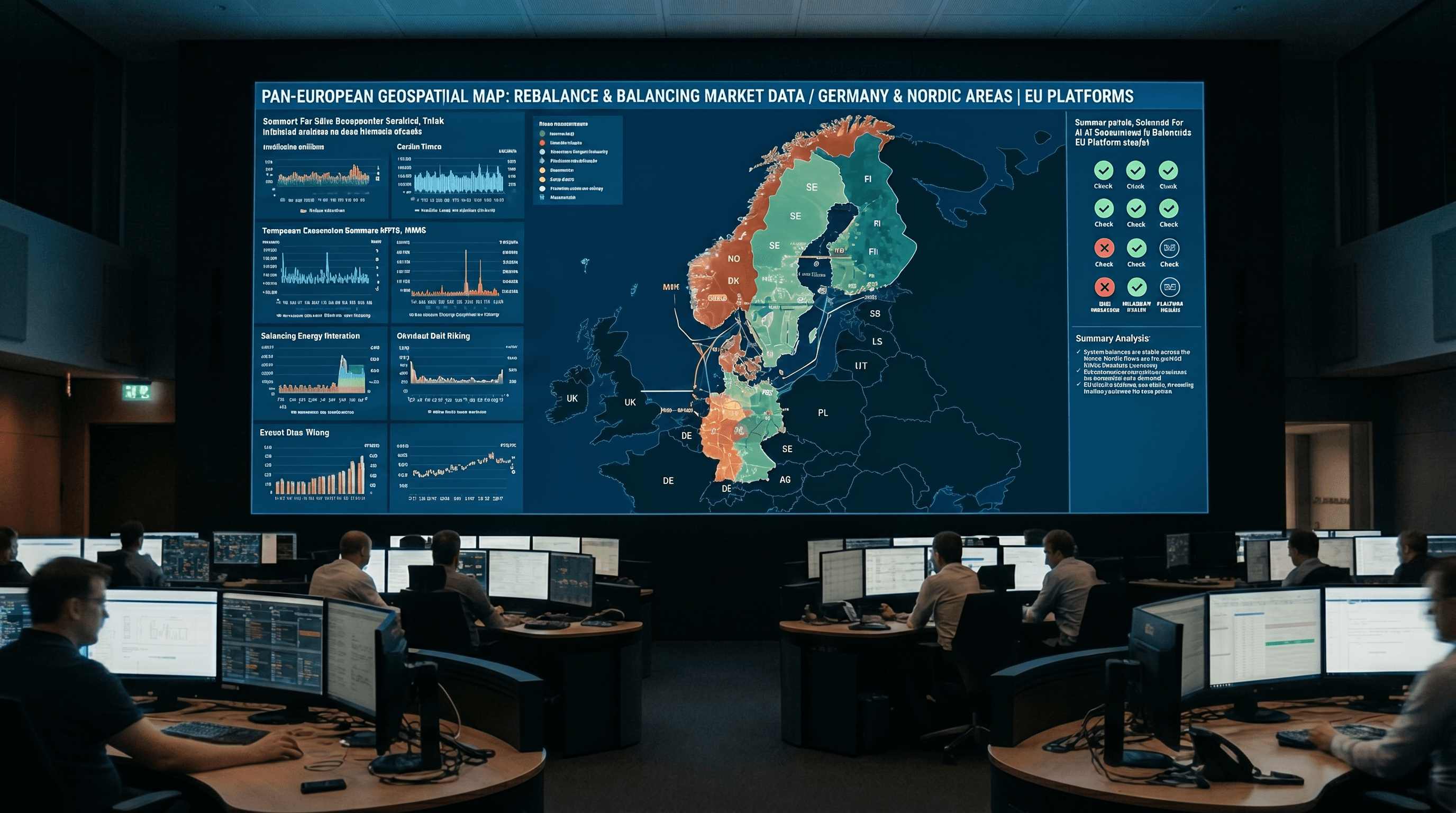
Continuously updated same-day signals and short-term forecasts, delivered through one API. Volue Ancillary Services combines live TSO data, EU balancing platform actuals and in-house forecasts into a reliable data stream for reserve and imbalance markets, including German imbalance and capacity/energy forecasts, Nordic balancing market intelligence, and pan-European platform data from PICASSO, MARI, IGCC, ALPACA and FCR markets as coverage rolls out.

In-house balancing market intelligence across Germany, the Nordics and EU balancing platforms. 

Volue Ancillary Services provides a consistent, API-first view of European balancing markets by combining actuals, real-time system signals and forecasts across multiple data sources. The product covers balancing capacity prices, balancing energy prices, activation probabilities, imbalance price estimates and system imbalance signals, starting with Germany and extending into DACH/CWE, the Nordics and EU platform data.

The platform data layer is designed to remove the fragmentation traders face when working directly with multiple TSO portals and country-specific formats. It brings together actuals from major European balancing platforms and TSO sources, including PICASSO aFRR data across participating bidding zones, MARI mFRR data, IGCC imbalance-netting volumes, ALPACA and FCR market data. This gives customers a continuous stream of balancing market data through one Volue Data & Forecasts API and UI. 

KEY FEATURES

Imbalance and balancing market data across Germany and every Nordic price area, with progressive rollout to the EU balancing platforms.

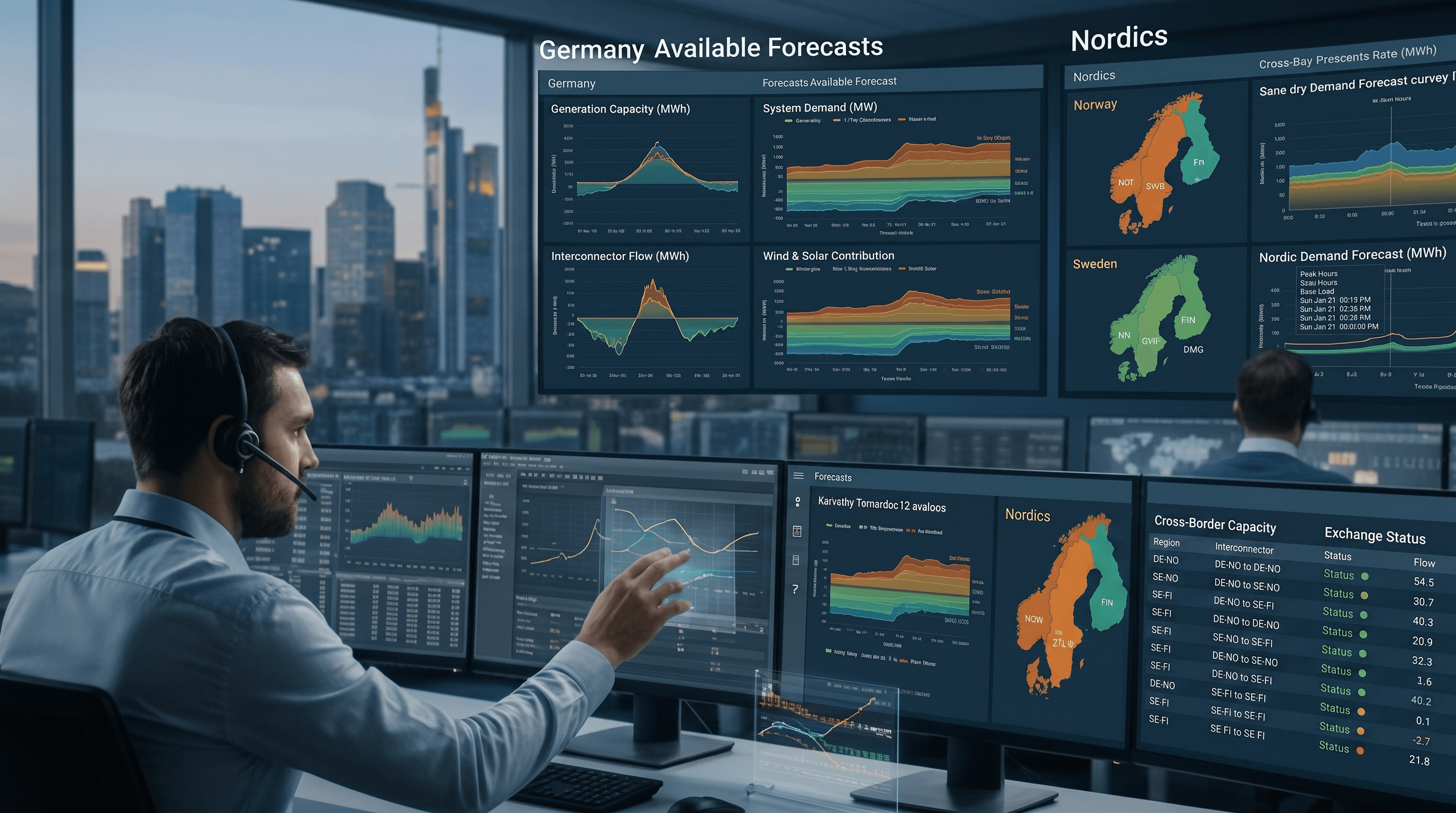
Available forecasts for FCR, aFRR and mFRR capacity and energy prices. In Germany, capacity outputs cover 4-hour blocks: aFRR and mFRR with median, 75th-percentile and maximum prices for both directions, and FCR as a single symmetric price. The energy forecasts at 15-minute resolution are available for different activation levels, as well as for the min and max bids. For the Nordics, same-day forecasts run across all price areas with horizons up to 72 hours and three clearings, refreshed continuously. 

Live system imbalance data, including NRV (Netzregelverbund-Saldo) and the German Ampel traffic-light indicator. Nordic imbalance signals continuously refreshed across each bidding zone, so traders and BRPs can track emerging market tightness as it develops. 

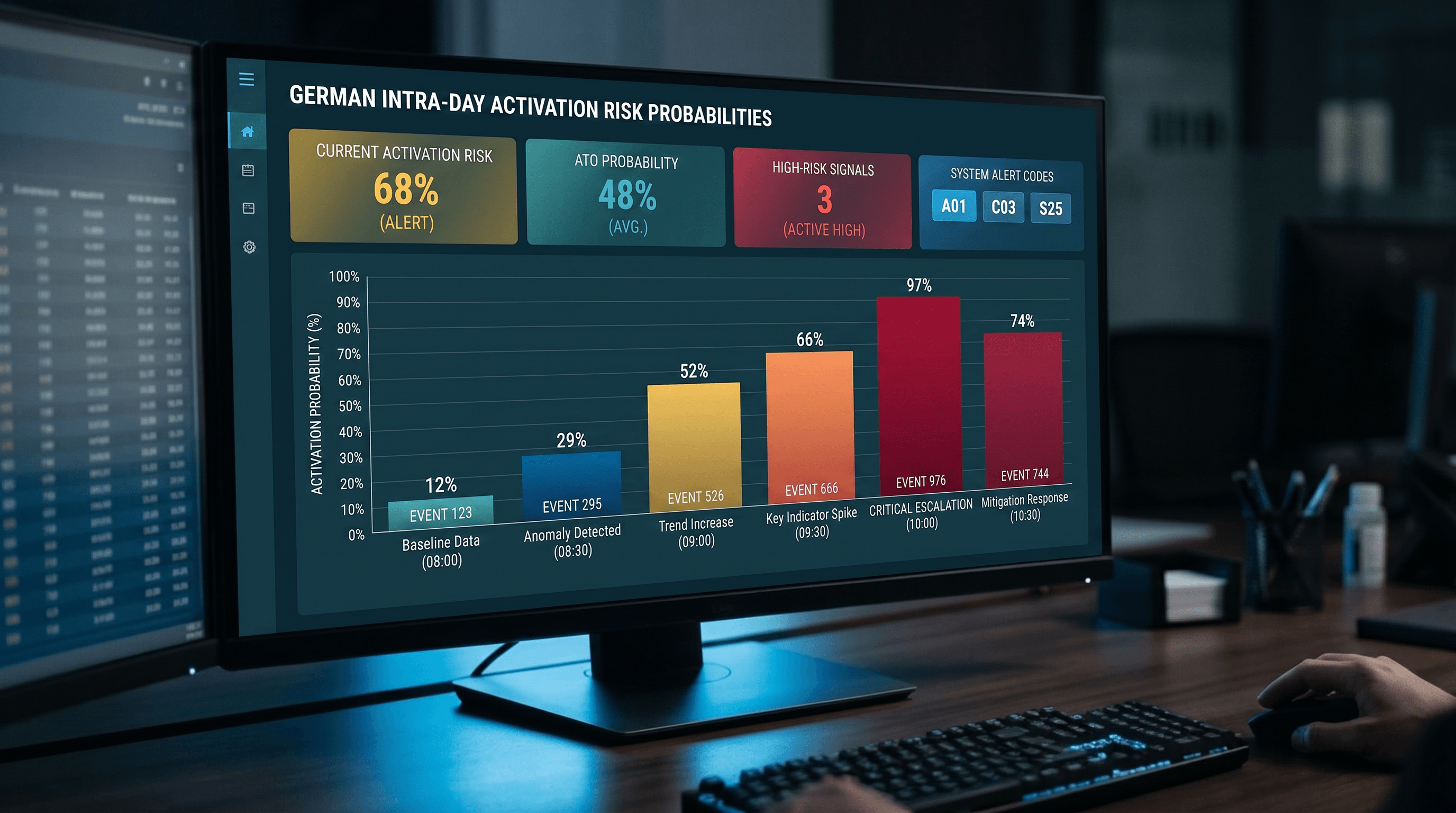
Forecasts of how likely a given volume is to be activated, both in German 4-hour blocks (derived from PICASSO and MARI activations) and across Nordic price areas in real time. This helps flexibility providers calibrate bid volumes against activation risk and refine reserve commitments with confidence. 

One framework for coordinated bidding across reserve, energy, intraday, day-ahead and imbalance markets. Forecast outputs serve as inputs to the full optimization stack and integrate natively with Volue Ancitra, SpotEx, Intraday and AI-Weather, removing the inefficiencies of running each market in isolation. 

Imbalance and balancing market data across Germany and every Nordic price area, with progressive rollout to the EU balancing platforms.

Lower Imbalance Costs

Timely imbalance estimates, probability signals and continuous position adjustment let BRPs and asset operators close exposure before settlement, lowering imbalance costs across Germany and Nordic portfolios.

Higher Bidding Revenue

More accurate capacity, energy and activation forecasts let you bid at optimal price levels in Germany's tendering market and across all Nordic bidding zones, increasing awarded contracts and reserve revenue.

One Source of Truth

A unified API replaces manual aggregation from multiple TSO and data-source portals, giving you consistent imbalance and balancing data across EU balancing platforms, Germany and the Nordics in a single workflow.

Faster, Automated Decisions

Real-time signals and continuously refreshed forecasts let your team react to market stress as it emerges, replacing manual processes with data-driven automation.

Multi-Market Optimization

Native integration with Volue Ancitra, SpotEx, AI-Weather and Intraday lets you optimize and arbitrage across reserve, intraday and spot markets simultaneously.

USE CASES

Use Volue's capacity, energy and activation forecasts to bid into FCR, aFRR and mFRR markets across Germany and all Nordic price areas. German outputs cover 4-hour blocks, with median, 75th-percentile and maximum prices supporting strategic and risk-aware bidding into the tendering market. Nordic forecasts deliver same-day horizons up to 72 hours and three clearings, refreshed continuously, so desks always act on the latest market signal before each gate closure. 

Track live system imbalance signals, including NRV (Netzregelverbund-Saldo) and the German Ampel traffic-light indicator, alongside continuously updated Nordic imbalance forecasts across every price area. Combined with short-horizon system imbalance probability models, traders and BRPs adjust positions throughout the operational day rather than discovering exposure at settlement, closing imbalance before it becomes a settlement cost. 

Flexibility providers, including BESS operators, demand-response aggregators and hydro asset owners, use activation probability forecasts to calibrate bid volumes both in German 4-hour blocks (derived from PICASSO and MARI data) and across Nordic price areas in real time. This informs reserve commitments, calibrates bid sizes, and reduces the risk of over- or under-committing capacity in volatile market conditions. 

Compare expected imbalance prices with intraday and day-ahead prices side by side to identify the most profitable market for each MTU, in Germany and across the Nordics. Volue's combined imbalance insights, intraday fundamentals and reserve forecasts give traders a full picture of where to clear volume in the final hour before delivery, turning imbalance from a settlement cost into a tradeable signal that desks can route automatically. 

Utilities, balance responsible parties and portfolio managers use Volue's actuals data and historical imbalance averages to verify TSO settlement, reconcile cost allocation, and identify recurring sources of imbalance exposure. For Nordic portfolios, imbalance forecasts are also evaluated directly on profit-and-loss (P&L), so finance and commercial teams see precisely how each model translated into margin or cost in real market conditions. 

GET IN TOUCH